
Botswana Diamonds
Botswana diamonds do good. The provenance of a diamond is an important factor to consider when purchasing diamond jewellery. Knowing the origin and the history helps make you a conscious consumer by ensuring you support ethical practices.

Diamonds were discovered in Botswana in 1967 a year after the countries Independence, previously Botswana had been a British protectorate. Since they were discovered the nation has gone from being one of the poorest in Africa to one of the most prosperous. Botswana is the second largest diamond producing country in the world and profits from diamonds are poured back into mining communities and the entire nation, with revenues invested in education and healthcare, infrastructure, agriculture and conservation.

In addition to supporting local communities through responsible mining practices, choosing diamonds with a known provenance from Botswana can also support local economic development. The diamond industry is a major contributor to the national economy, and by purchasing diamonds from the country, you can help to directly support local jobs and development.
“For our people every diamond purchase represents food on the table, better living conditions, better healthcare, potable and safe drinking water, and more roads to connect our remote communities.” Festus Mogae, former president of Botswana.
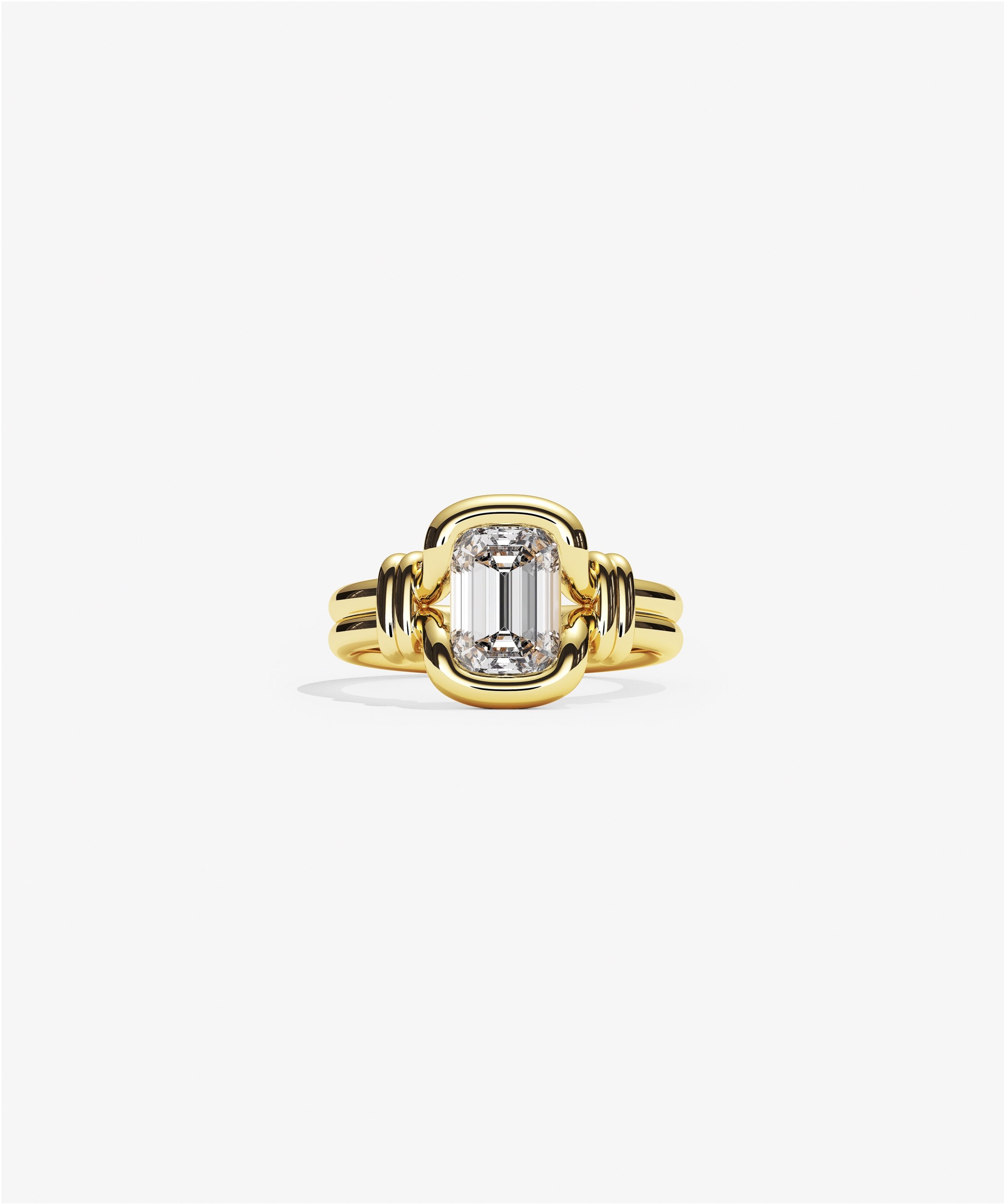
A North-South Diamond Ring with a 2.00ct Emerald cut Botswanamark diamond, bezel-set in 18K yellow gold.
Part of the Banyan collection - symbolising how we are all intertwined with Nature not separate from her.
This ring is exclusively made to order, and can be made in different carat sizes, enquire here
DETAILS
Stone: Diamond, ethically mined responsibly sourced Botswanamark
Shape: Emerald
Metal: 18K Yellow Gold, 8g
Colour F
Clarity: VS2
Total Carat Weight: 2.00ct
Having lived in Botswana for five years I know the positive impact that diamonds have on the community and country as a whole, so it was an easy choice to feature Botswana diamonds in our jewellery; they are fully traceable, ethically mined and responsibly sourced. The benefits of working with Botswana diamonds extends beyond the conflict free label. Ethical diamonds means no human rights abuses, employees are fairly paid with safe working conditions and environmentally sound practices.
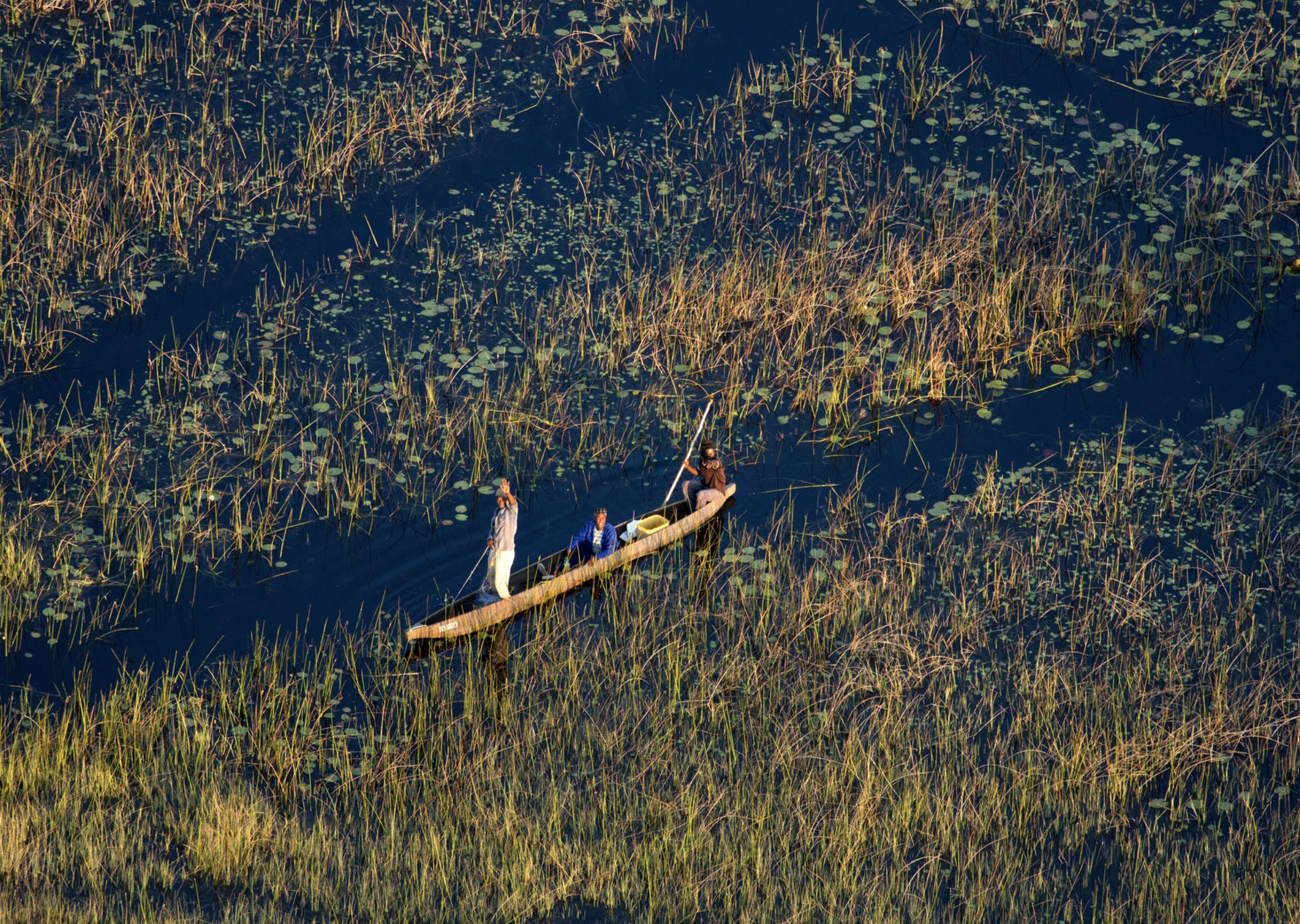
But can natural diamonds really be considered sustainable? While it is true that the mining process can have negative impacts on the environment and local communities, there are also efforts being made to minimise these impacts and promote sustainable practices. Diamond mining companies are working to reduce their carbon footprint, minimise water usage, and protect natural habitats. Botswanamark diamonds are carbon neutral and the mines in Botswana will be carbon neutral by 2030.

Mokola Collection 14kt recycled gold, enamel and carbon-neutral Botswanamark diamond
Frequently Asked Questions
-
Beabond offers traceablility of our diamonds; Botswanamark diamonds are of Botswana origin and all stones above 0.2 carats are GIA certified and traced on blockchain.
-
Diamonds from Botswana have the lowest footprint, Botswanamark diamonds are carbon neutral, through an initiative in the Okavango Delta. Botswanamark diamonds are the finest diamonds in the world supporting communities enriching the lives of the people of Botswana helping to bring education, wildlife protection and safe in drinking water to communities. We call this the 5th C - Community.
-
The Kimberley Process (KP) is an international, multi-stakeholder trade regime created in 2003 to increase transparency and oversight in the diamond supply chain in order to eliminate trade in conflict diamonds, defined as rough diamonds (or “blood diamonds” by Hollywood) sold by rebel groups or their allies to fund conflict against legitimate governments.
The KP facilitates legitimate trade in rough diamonds among participating countries by mandating domestic implementation of a certification scheme that makes the trade more transparent and secure and prohibits trade with non-participants. Fifty-nine participants representing 85 countries, including the United States and the EU (which represents EU member states), participate in the KP.
Industry and civil society participate as observers. The KP certification scheme requires rough diamonds to be shipped in tamper-proof containers and exported with a Kimberley Process Certificate that certifies that the rough diamonds have not benefited rebel movements. [Source: US Department of State]
-
The 5th C stands for Community. Botswana has long been one of the world’s most important sources of natural diamonds, known not only for quality, responsible sourcing, ethical mining practices, transparency and the social economic benefit it has brought to the country and its remote communities.